Paul Biya, The Butcher of Yaoundé Unleashes A Reign Of Terror On Cameroonians
The gruesome reports emerging from Cameroon confirm that the political crisis has moved far past electoral fraud and entered a horrifying stage of violent state-sponsored repression. This piece analyzes the consequences of a regime clinging to power through terror, revealing a "necrocracy" where the state machinery is animated solely by the mandate to crush dissent. The op-ed forces the world to confront the horrifying cost of maintaining Paul Biya’s illusion of rule, measured in secret graves, amputated limbs, and the systematic erasure of human dignity.
OPINION
Theodore Nkwenti
11/16/20254 min read
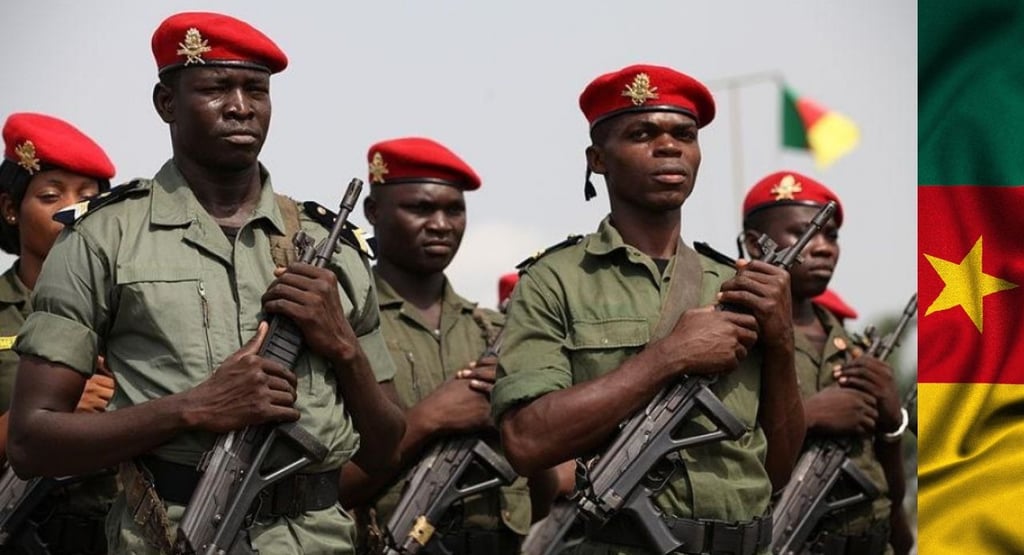
There is a moment in the life of every tyranny when the mask slips entirely and the world beholds not a statesman, not even a dictator, but a cadaver still animated by the machinery of murder. An ancient proverb offers a chilling insight into the mind of a tyrant: “An evil man will burn down his own country to rule over the ashes.” Cameroon has reached that moment.
Paul Biya—92 years old, absent from his own country for months at a time, a spectral figure propped up by French hospitals and Swiss bank accounts who has clung to power through a toxic brew of electoral fraud, economic stagnation, and unyielding repression— and with the help of a ruling kleptocratic class, has just engineered his eighth consecutive electoral theft. The Constitutional Council, that servile conclave of geriatric accomplices, pronounced him victor with the mechanical solemnity of a funeral oration. And then the killing began in earnest.
The evidence is horrifyingly clear: Human Rights Watch reports at least 48 civilians killed by security forces since the protests began, with opposition estimates climbing to 55 in Douala, Garoua, and Bafoussam. Snipers—trained, equipped, and given carte blanche with orders traced back to the desk of a regime that has long since abandoned the pretense of law—pick off students and bystanders with the casual precision of men harvesting yams.
One detainee, name already erased, has been buried in a secret grave, his tongue silenced forever by the earth itself. Another lies in a hospital bed minus a leg, the price of a bullet fired by one of Biya’s troops for the crime of wearing the wrong T-shirt. These are not “incidents.” These are the sacraments of a necrocracy: a government of the dead, by the dead, for the dead.
When Biya finally deigned to speak—voice rasping like parchment—he offered the nation his “thoughts” for those who had died “unnecessarily.” Unnecessarily. The word drips with aristocratic contempt and callous dismissal, as if the right to breathe were a bureaucratic formality that protesters had foolishly neglected to request. This is not mere hypocrisy; it is the language of a monarch who believes the Cameroonian people exist only as stage props in the interminable passion play of his own immortality.
More than 800 have been arrested, including minors, students, and opposition figures, many detained in notorious facilities like the State Defence Secretariat where torture is routine. Abductions have become so routine they barely merit headlines. Ahamadou Oumarou vanishes at five o’clock in Garoua, swallowed by unmarked vans. Nabidje Salomon, a university student whose sole offense was a T-shirt bearing the colors of the Front pour le Salut National, is erased on his way to class. The regime no longer bothers with the fiction of arrest warrants; it simply harvests citizens the way one harvests cocoa—brutally, indiscriminately, and with the calm assurance that the international market will still buy the crop.
For forty-three years this nonagenarian parasite has fed on Cameroon the way a tapeworm feeds on its host: slowly, relentlessly, until the body politic is a hollowed-out husk. Oil revenues vanish into the offshore accounts of a narrow incestuous Bulu-Beti-Ekang elite that speaks French with a Parisian accent and Cameroonian with the forked tongue of betrayal that has ruled Cameroon like a private plantation. Youth unemployment is not a crisis here; it is policy. Potholed roads, collapsing schools, hospitals without morphine—these are not failures of governance. They are instruments of governance. A people kept hungry, sick, and ignorant are a people too exhausted to storm the palace.
And the world watches with the exquisite cowardice that has become its signature response to African despotism. France—Biya’s geriatric bodyguard and silent partner in plunder—mumbles about ‘stability’ while TotalEnergies and Bolloré continue to extract timber and petroleum from a country which cannot guarantee running water for seventy-two consecutive hours or keep the lights on in its own capital city.
The African Union issues statements drafted in the passive voice, as if bullets fired themselves. The United States, ever eager to lecture the world on democracy, contents itself with a tweet from a mid-level senator. All of them understand the unspoken covenant: as long as Biya keeps the Anglophone secessionists crushed, the Boko Haram frontier quiet, and the oil flowing, the blood on his manicured hands can be classified as an “internal matter.”
History will not be so delicate. History will record that in the year 2025 a living corpse declared himself president-for-life while his praetorian guard amputated the future of his country, limb by limb. History will remember the secret graves, the midnight abductions, the snipers on the rooftops harvesting the children of a nation that dared to dream of tomorrow.
There is an old saying among the Bamileke: “When the dead refuse to stay buried, the living must dig new graves.” Paul Biya and his ruling circle of miscreants have misdiagnosed the silence of mass graves for acquiescence. He is gravely mistaken. Beneath the fresh earth of those unmarked mounds, something is stirring. A generation is learning that even ashes, when compressed by decades of rage, become diamonds hard enough to cut through the throat of a tyrant himself. Those ashes are not yet cold, and from them a generation is rising that has nothing left to lose but the chains forged in 1982.
Let the world choose now whose side it stands on: the necrophiliac dynasty of a 92-year-old tyrant, or the furious, wounded, indomitable youth of Cameroon who have decided that even ashes can learn to burn.