Kilimanjaro News Network
The Voice of Africa
UMOJA
NA MAENDELEO

The Gambia Offers Cameroon Opposition a lifeline as President Elect Issa Tchiroma Is Welcome To Stay
The political tremors from a small West African nation’s decision are now being felt over 2,000 miles away. In a stunning act of diplomatic defiance, The Gambia has granted sanctuary to a man who claims the presidency of Cameroon, directly challenging one of Africa’s longest-serving rulers and shattering the unspoken rule of non-interference that has long protected its autocrats. It is being called the “Banjul Gambit”: a bold, high-stakes manoeuvre where the smallest player on the board makes a move that threatens to checkmate a king. By opening its doors to Cameroon’s self-proclaimed president-in-exile, The Gambia has not merely offered humanitarian aid; it has launched a strategic assault on the legitimacy of President Paul Biya, transforming a forgotten political struggle into the continent’s newest and most volatile flashpoint.
WORLD AFFAIRS
E. N. Quenti
11/23/20257 min read


BANJUL/DOUALA – A routine press release from The Gambia’s government has ignited a firestorm in Central and West African diplomacy. The confirmation that the small West African nation has granted temporary humanitarian asylum to Issa Tchiroma, a Cameroonian opposition figure who claims victory in the country's last presidential election, represents a direct challenge to the long-ruling government of President Paul Biya in Yaoundé.
With the news just breaking, the situation is fluid, but the move is already being analysed as a significant escalation that could reshape the dynamics of Cameroon's internal conflict and regional alliances.
How Cameroon is Likely to React
Based on the Biya government's historical responses to external criticism and challenges to its legitimacy, a multi-pronged reaction is anticipated.
Diplomatic Condemnation and Pressure: The first and most certain step will be a formal, strongly worded condemnation from Cameroon's Ministry of Foreign Affairs. Yaoundé will likely summon The Gambia's ambassador to protest what it will label a "blatant violation of international law" and the principle of non-interference in sovereign affairs, a cornerstone of the Biya administration's foreign policy. Cameroon can be expected to lobby the African Union (AU) and the Economic Community of Central African States (ECCAS) to censure The Gambia's actions.
Dismissal and Demean Tchiroma's Significance: Officially, the Cameroonian government will seek to downplay Tchiroma's importance. State media and spokespeople will likely characterise him as a fringe figure with no legitimate political standing, framing The Gambia's actions as a misguided stunt based on a false narrative.
Exploration of Retaliatory Measures: While direct military action is implausible, Cameroon may explore other levers of pressure. These could include recalling its ambassador from Banjul, imposing economic or travel restrictions, and using its influence within regional bodies to make life difficult for The Gambia. However, given the geographical distance and limited direct trade, Cameroon's tangible economic leverage is limited.
Impact on Internal Dynamics in Cameroon
The asylum offer strikes at the core of the political struggle within Cameroon.
For the Biya Regime: The primary damage is to the regime's narrative of total control and legitimacy. For years, the government has successfully contained and marginalised opposition, both political and armed. An opposition figure finding official sanctuary abroad, even from a small nation, creates a visible crack in that facade. It provides a tangible symbol for the diaspora and internal opposition that their cause has international recognition.
For the Opposition and Separatists: This development is a potent symbolic victory. It offers a psychological boost to a fragmented opposition, demonstrating that their plight can find a hearing on the African stage. It could incentivise greater coordination among disparate groups, potentially using Banjul as an external hub. For the Anglophone separatist movements (Ambazonia), it indirectly validates their long-held claim that the central government in Yaoundé is an illegitimate occupier, even if Tchiroma himself is from the Francophone majority.
Shifting Regional Dynamics
The Gambia's move is a bold departure from the regional playbook.
A Challenge to the "Non-Interference" Doctrine: The Gambia, under President Adama Barrow, is explicitly challenging the long-standing African Union principle of non-interference, which has often been used as a shield by authoritarian regimes. By invoking "African solidarity" and "humanitarian grounds," Banjul is reframing the crisis as a Pan-African responsibility, not merely an internal affair.
A Test for Regional Blocs: This action forces regional organisations like ECOWAS (to which The Gambia belongs) and ECCAS (to which Cameroon belongs) into a difficult position. They will be under pressure from Yaoundé to condemn the act, while also facing scrutiny from civil society and other democracies to uphold their own democratic charters. Their response, or lack thereof, will be closely watched as a barometer of their relevance in resolving political crises.
A Precedent for Other Nations: If The Gambia faces no significant consequences, it could embolden other nations with more progressive governments, such as Niger, Mali, Burkina Faso or Senegal, to take similarly critical stances against the Biya regime, potentially leading to its further isolation.
Looking Ahead
In the immediate term, a fierce diplomatic war of words is inevitable. The Biya regime will use all its tools to isolate The Gambia and discredit Tchiroma. The critical unknown is whether The Gambia's gamble will inspire other nations to follow its lead, creating a snowball effect that applies genuine pressure on Yaoundé, or if it remains a symbolic but ultimately contained act of defiance. For now, a small nation has placed itself at the center of a major political storm, and the ramifications for one of Africa's most entrenched governments are just beginning to unfold.
Adama Barrow is a man who has built his career on unexpected moves. A former security guard and real estate agent who toppled a dictator. A leader who campaigned on a promise to rule for three years, only to secure a full five-year term. Now, President Adama Barrow of The Gambia has executed his most audacious geopolitical play yet: granting sanctuary to a challenger to Cameroon’s 42-year ruler, Paul Biya. In doing so, Barrow is transforming himself from a national leader into a strategic provocateur, deliberately carving out a new role as a champion of democratic dissent in an Africa often dominated by aging autocrats.
The Architect of an Unexpected Gambit
The decision to host Cameroonian opposition figure Issa Tchiroma is not an isolated act of charity. It is the latest data point in a calculated political project to redefine The Gambia’s place in the world, and Barrow’s own legacy. To understand the move, one must understand the man: not a career soldier or a lifelong party insider, but a pragmatic businessman who entered politics late and learned to wield power with a surprising blend of caution and boldness.
Barrow’s political identity was forged in the crucible of 2016, when he became the unity candidate for a coalition of opposition parties determined to end Yahya Jammeh’s 22-year reign of terror. His victory was a shock; Jammeh’s initial refusal to cede power triggered a constitutional crisis that required military intervention by ECOWAS to uphold the vote. Barrow did not seize power; it was handed to him by the collective will of his people and the muscle of regional allies. This origin story is crucial, it instilled in him a tangible debt to the principle of democratic legitimacy and the potential of regional bodies as forces for good.
The Methodical Pivot to a "Moral Foreign Policy"
Since consolidating power, Barrow has methodically shifted The Gambia’s foreign policy. He has overseen a nation that has become a vocal participant in international justice, notably at the International Court of Justice regarding the Rohingya crisis. Domestically, while his government faces its own challenges with corruption and slow reform, he has permitted a Truth, Reconciliation, and Reparations Commission (TRRC) to publicly investigate Jammeh’s atrocities, a painful but necessary national catharsis.
The offer of asylum to Tchiroma is the logical extension of this pivot. It is a low-risk, high-reward strategy for a small state. The Gambia has little to lose economically from Cameroon, and the diplomatic fallout, while real, is manageable. The potential gain, however, is immense: an outsized influence on the continental stage.
"Barrow is playing a weak hand with masterful skill." What he possesses is moral capital, earned from his own democratic transition. He is spending that capital now to position The Gambia, and himself, as a beacon for democratic forces. It’s a powerful brand to build."
The Calculus of a Businessman-Politician
The profile of Barrow that emerges is not that of a fiery ideologue, but of a strategic pragmatist. He understands narrative and symbolism. By invoking "African solidarity" and "humanitarian grounds," he has chosen a framing that is nearly unassailable. He is not calling for revolution; he is offering a bed to a man he portrays as a victim. This provides him with diplomatic cover while achieving the same disruptive effect.
This move also serves a sharp domestic purpose. It galvanizes his base, which is weary of the old ways of African politics. It distinguishes him not only from monsters like Jammeh but also from the complacent leaders who turn a blind eye to crises in neighbouring countries. It is a declaration that The Gambia, under his leadership, has a voice and a conscience.
The Stakes of the Gambit
The risks are real. Barrow is directly challenging the clubby, non-interference consensus that has protected long-serving leaders like Biya. He is betting that the tide of African public opinion is turning in favour of accountability and democracy. If he is correct, his stature will grow exponentially. If he fails, and Biya weathers the storm with support from other regional heavyweights, Barrow could be left isolated, his gambit dismissed as a futile gesture.
But Adama Barrow has defied expectations before. He is not a soldier on the battlefield but a strategist in the war of ideas. By opening his nation's doors to a rival of Paul Biya, he has fired a shot that echoes far beyond The Gambia’s borders. He is no longer just the president who defeated a dictator; he is actively building a legacy as the leader who dared to challenge the very system that produces them. The success of this profile will depend on whether his courage inspires followers or provokes a crushing backlash. For now, Adama Barrow has ensured that the world, and a beleaguered opposition in Cameroon, are watching Banjul.
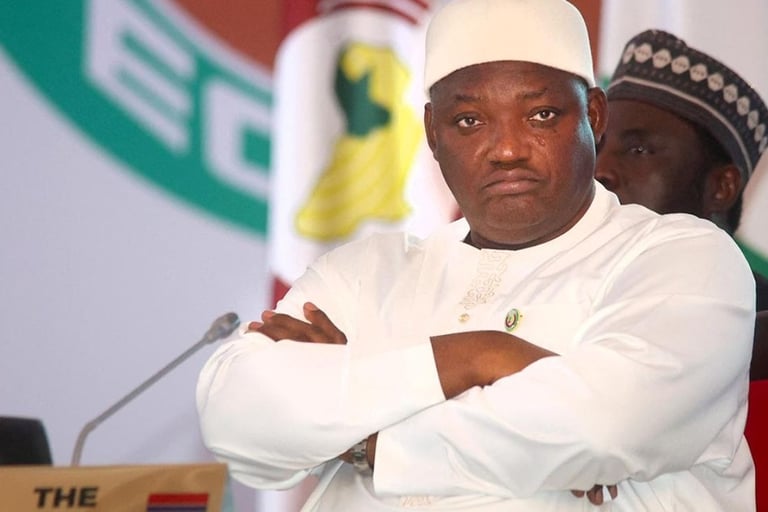


Adama Barrow - Presidentof The Gambia..
Adama Barrow - Presidentof The Gambia..
Adama Barrow - Presidentof The Gambia..
Who is Adama Barrow?